A simple guide for anyone who loves motorcycles and wants to build something of their own
Have you ever seen a motorcycle that just stopped you in your tracks? Not because it was the newest model or the most expensive one in the showroom but because it looked different. Raw. Personal. Like someone put their heart into building it piece by piece.
That’s what a cafe racer feels like.
Cafe racer conversions are one of the most popular things happening in the motorcycle world right now. People are taking old bikes sometimes very old ones and turning them into these lean, stripped-down, beautiful machines. Some people do it for the looks. Some do it because they love the building process. And some do it because they want a bike that nobody else in the world has.
If you’ve been curious about cafe racer conversions but don’t know where to start, this blog is for you. I’m going to explain everything in simple language what a cafe racer is, where the style came from, which bikes work best for conversions, what changes you need to make, how much it costs, and what you need to watch out for.
By the end of this, you’ll have a clear picture of whether a cafe racer conversion is something you want to try — and if so, how to approach it the right way.
First Things First: What Exactly Is a Cafe Racer?
Let’s start with the basics.
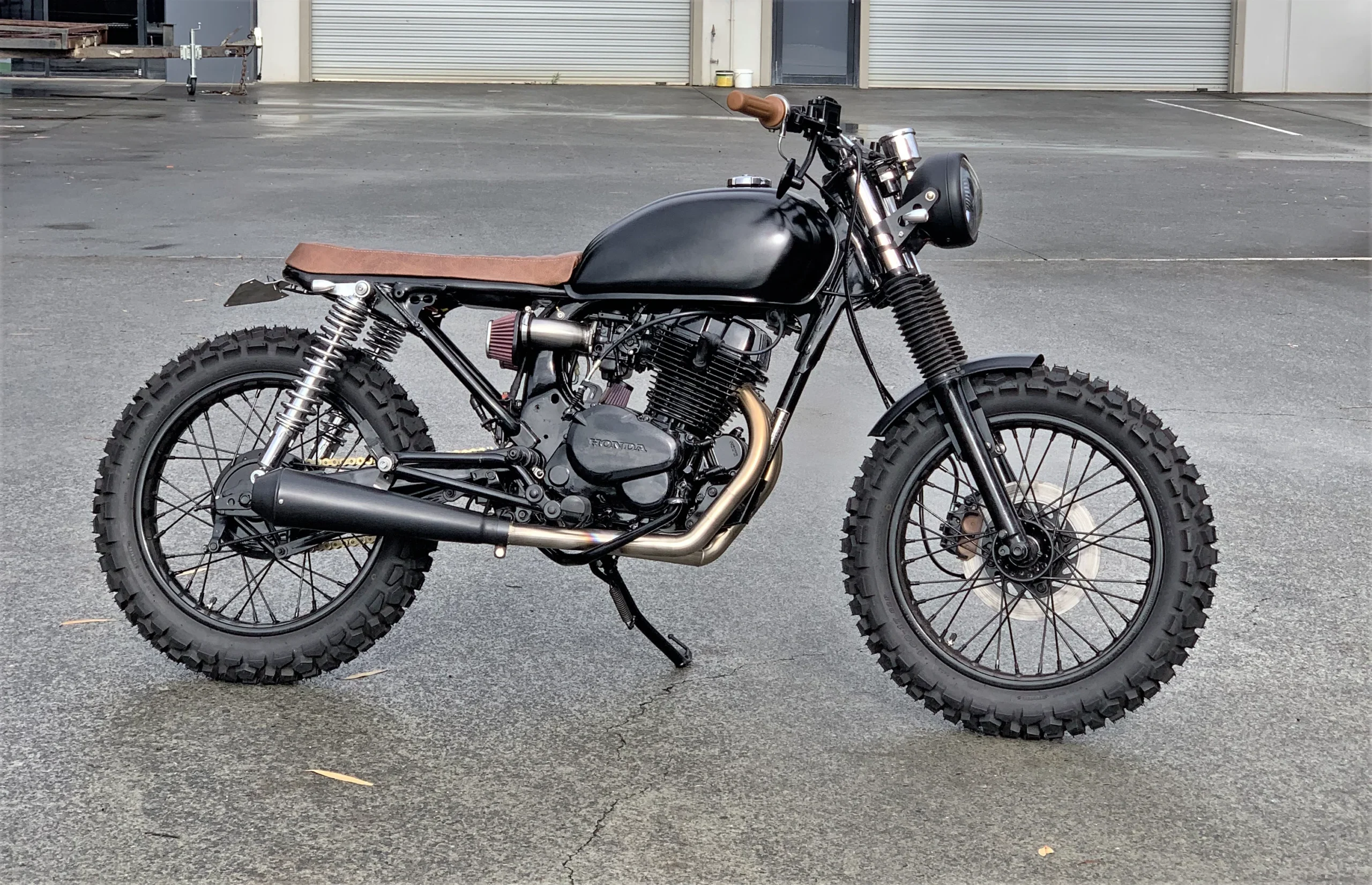
A cafe racer is a type of motorcycle that is built to look fast and feel sporty even when it’s standing still. The typical cafe racer has a few defining features. It sits low. The handlebars are low and pulled back toward the rider, so the rider leans forward in a racing position. The seat is usually long and flat, sometimes with a small bump at the back called a “hump.” The body is slim and stripped of anything that isn’t necessary. No extra chrome, no extra accessories just the essential parts.
The style is retro. It looks like it came from the 1960s or 1970s. But modern cafe racers combine that old-school look with better parts and sometimes modern technology under the skin.
A cafe racer conversion means you take an existing motorcycle one that wasn’t originally a cafe racer — and you modify it to look and feel like one. You’re not buying a cafe racer. You’re building one.
Where Did the Cafe Racer Style Come From?
To understand why cafe racers look the way they do, it helps to know a little history.
In the 1950s and 1960s, in England, there was a group of young motorcycle riders who used to hang around cafes especially a famous place called the Ace Cafe in London. These riders loved speed. They would race each other from one cafe to another, trying to cover the distance before a song on the jukebox finished playing. These races were called “record runs.”
Because they were racing on public roads, these riders needed their bikes to be fast and lightweight. They stripped off anything unnecessary windscreens, passenger seats, extra chrome, heavy accessories. They lowered the handlebars to reduce wind resistance. They made their bikes as slim and light as possible.
Over time, this style became its own thing. The “cafe racer” look became famous — not just in England, but all over the world.
Today, you don’t need to race from cafe to cafe to build a cafe racer. The style is kept alive by builders, enthusiasts, and hobbyists who love the aesthetic and the culture behind it. It’s about passion for motorcycles and the joy of building something with your own hands.
Why Are People Doing Cafe Racer Conversions?
Good question. If you just want a nice-looking motorcycle, you can buy one from a showroom, right? So why do so many people choose to build their own?
Here are the real reasons:
It’s personal. A cafe racer you build yourself is completely unique. No two are exactly alike. You choose the colors, the parts, the style. It becomes an expression of who you are. Nobody else in the world has the same bike.
It’s satisfying. There’s something deeply satisfying about riding a motorcycle you built with your own hands or that was built to your exact specifications. Every time you ride it, you feel a sense of pride that you just can’t get from a showroom purchase.
It can be affordable. You don’t need to buy an expensive motorcycle. Many successful cafe racer builds start with old, cheap bikes that you can pick up for very little money. The raw material is inexpensive. You spend money on parts and labor, but you control how much.
It’s a community. The cafe racer world is filled with enthusiasts who love to share knowledge, show off builds, give advice, and celebrate each other’s work. Getting into cafe racer conversions means joining a community of like-minded people. It’s a hobby that connects you with others.
It’s fun. For people who love motorcycles, the building process itself is enjoyable. Planning the build, sourcing parts, solving problems, watching the bike take shape — it’s genuinely fun, even when it’s frustrating.
Which Bikes Work Best for Cafe Racer Conversions?
This is one of the most common questions for beginners, and it’s a great place to start. Not every motorcycle makes a good cafe racer base. Some bikes are much easier to convert than others, and some give better results.
Here are the best options across different budgets and regions:
Royal Enfield Bullet / Classic 350
If you’re in India, the Royal Enfield is probably the most popular choice for cafe racer conversions — and for very good reason. The single-cylinder engine has a classic character. The frame is a good shape to work with. There are thousands of aftermarket parts available specifically for Royal Enfield cafe racer builds. And spare parts are easy to find and affordable.
The Classic 350 and the older Bullet models are both popular starting points. The older the bike, sometimes the better older models can be picked up cheaply and their simpler electronics make modifications easier.
Honda CB Series (CB100, CB125, CB350, CB500)
Honda’s CB series bikes are among the most popular cafe racer bases in the entire world, and they’ve been used for this purpose since the 1970s. The reason is simple: Honda CB bikes have a classic parallel-twin engine look, a frame that suits the cafe racer style naturally, and an enormous community of builders who have already figured out how to do almost every modification you can think of.
If you can find an old Honda CB in decent condition, it’s an excellent starting point. In India, the newer Honda H’ness CB350 has also become popular for cafe racer-style modifications.
Yamaha RX100 / RD350
For those who love old-school Indian motorcycles, the Yamaha RX100 and RD350 have a dedicated following in the cafe racer community. These two-stroke bikes have a lightweight chassis and a raw, mechanical character that suits the cafe racer style well. Good examples are getting harder to find and more expensive, but if you can get one, it makes a fantastic base.
Kawasaki W175 / W650 / W800
Kawasaki’s W series bikes are practically designed to be turned into cafe racers. They have a classic British-style parallel-twin look, upright styling that’s easy to modify, and a vintage character that works beautifully with the cafe racer aesthetic. The W175 is accessible and affordable in many Asian markets. The W650 and W800 are premium options for those who want more power.
Triumph Bonneville / Thruxton
At the higher end, the Triumph Bonneville is a classic cafe racer base. The Thruxton, which is Triumph’s own factory cafe racer, shows you what’s possible — and buying a base Bonneville and modifying it gives you similar results for less money. The British heritage, the parallel-twin engine, and the classic styling make it a natural fit.
Ducati Monster / Sport Classic
For Italian motorcycle lovers, older Ducati Monsters are used as cafe racer bases, though these builds tend to be more expensive. The trellis frame and L-twin engine give a very distinctive look.
The Key Modifications: What Actually Makes a Cafe Racer?
Now let’s get into the actual changes you make during a conversion. You don’t need to do everything on this list — the depth of your conversion depends on your budget, your skills, and what you want the final bike to look like.
1. Handlebars
This is the single most important change. On a cafe racer, the handlebars are low and narrow. The most popular style is called “clip-on” handlebars these clamp directly onto the front forks instead of mounting to the top of the headstock. They create that distinctive forward-leaning riding position.
Another option is “clubman” handlebars, which mount to the top clamp but sweep down and forward. These give a similar look with a slightly more comfortable riding position.
Changing your handlebars also usually means changing your cables, brake lines, and wiring — because the routing changes. Factor this into your planning.
2. Seat
The seat transformation is dramatic and immediately changes how the bike looks. Cafe racer seats are flat, slim, and long. They often have a raised section at the back called a “seat hump” or “cowl.” The seat is usually covered in plain leather or vinyl in a simple color.
You can buy ready-made cafe racer seats for many popular bike models. Or you can have a custom seat made by an upholstery shop this gives you total control over the shape and material.
3. Fuel Tank
On many builds, the original fuel tank stays, because the shape already works well. But on some bikes, the stock tank looks too modern or too bulky. In those cases, builders swap in a classic teardrop-shaped tank often sourced from old Honda or Ducati bikes — to get the right look.
If the original tank stays, it’s usually repainted in a solid color or with a simple graphic. Matte finishes and two-tone paint jobs are both popular.
4. Tail Section / Rear End
One of the most visible changes is the rear end. Most stock bikes have a plastic tail section with lights built in. On a cafe racer conversion, this is usually removed and replaced with a simple metal or fiberglass “tail cowl” a small, clean piece that sits at the back of the seat.
The rear fender is often “bobbed” cut shorter or replaced with a small minimalist fender. The wiring for the rear lights gets rerouted cleanly.
5. Exhaust
The exhaust system has a huge impact on both the look and the sound of the bike. Cafe racer builds often use a short, high-mounted exhaust pipe that exits just below the seat on the side — called a “shorty” or “scrambler” exhaust. Others use a low-slung, two-into-one system that wraps under the engine.
Custom exhaust work is not cheap if done properly, but the change in sound and appearance is dramatic. A good exhaust makes the bike come alive.
6. Suspension
Many cafe racer conversions upgrade the suspension, especially the front forks. Longer, more aggressive-looking forks change the stance of the bike. Upgraded rear shocks improve both the look and the ride quality.
This is an area where spending a little more makes a real difference. Cheap suspension components can make a nice-looking bike unpleasant to ride.
7. Wheels and Tires
Classic wire-spoke wheels are a very popular choice for cafe racer builds. They look fantastic with the vintage aesthetic. Some builders keep the original wheels but wrap them in wider, grippier tires. Others go all the way with a full wheel swap.
Tire choice matters a lot for both look and handling. Wide rear tires with a slightly flat profile give a muscular look. Classic-pattern tires (like the Avon Speedmaster or Metzeler Perfect ME77) reinforce the vintage feel.
8. Electronics and Lighting
This is where many conversions modernize things while keeping the look clean. Old, bulky turn signals get replaced with small “bar-end” indicators that mount to the ends of the handlebars. Round, retro-style headlights often converted to LED replace modern rectangular units.
Wiring is often cleaned up and “tucked” so that it’s hidden as much as possible. A messy wiring harness running all over the bike destroys the look. A clean, hidden wiring job elevates the whole build.
9. Paint and Finish
The paint is what everyone sees first. Cafe racer paint schemes tend to be simple and bold — solid colors, two-tone splits, or racing stripes. Matte black is iconic. British racing green is classic. Burgundy, cream, and metallic blue are all popular.
The frame is often painted in a contrasting color or powder-coated in black. Some builders strip the engine covers and polish them to a bright shine. Others bead-blast them for a raw, matte look.
How Much Does a Cafe Racer Conversion Cost?
This is the question everyone wants to know, and the honest answer is: it depends completely on what you start with and how far you go.
Here’s a rough breakdown for the Indian market:
Budget Build (Rs 30,000 – Rs 80,000 total) Start with an old Royal Enfield or Honda CB in rough condition for Rs 20,000–40,000. Spend Rs 30,000–40,000 on parts aftermarket seat, clip-on bars, a basic exhaust, some electrical work, and paint. Do as much of the work yourself as possible.
Mid-Range Build (Rs 1,00,000 – Rs 2,50,000 total) Start with a better-condition bike. Use quality parts a decent suspension upgrade, custom seat, proper exhausts, wire-spoke wheels, and a professional paint job. Use a trusted custom shop for the mechanical and fabrication work.
Premium Build (Rs 3,00,000 – Rs 8,00,000+) Start with a quality base bike in good condition. Commission a full professional build from a reputable custom motorcycle workshop. Hand-built parts, custom fabrication, top-quality paint, and performance upgrades throughout.
Keep in mind that costs can escalate quickly. Parts that seem cheap individually add up fast. Always budget more than you think you’ll need most builds go over their original budget.
Finding the Right Builder: DIY vs. Custom Shop
You have two main paths: build it yourself or hire a custom shop to do it.
DIY (Do It Yourself) is rewarding but requires time, tools, mechanical skill, and patience. If you’re comfortable doing your own maintenance and basic mechanical work, you can take on more of a cafe racer build yourself. Start with the easier parts the seat, bars, and paint and outsource the more complex work like exhaust fabrication and electrical.
Custom Shops vary enormously in quality. In India, there are now many excellent custom motorcycle workshops doing beautiful cafe racer builds in cities like Mumbai, Bangalore, Pune, Delhi, and Chennai. Research shops carefully before committing. Look at their previous builds. Read reviews. Talk to past customers if possible.
A good custom shop will work with you to understand your vision, advise you on what’s realistic for your budget, and build something you’re genuinely proud of. A bad shop will take your money and deliver something disappointing.
Things to Watch Out For
A few important warnings for anyone getting into cafe racer conversions:
Legality matters. In India, modifying registered vehicles has legal boundaries. Major structural modifications require approval from the Regional Transport Office (RTO). Before starting a build, understand what’s legal and what requires documentation. Riding an illegally modified bike can result in fines or the bike being seized.
Don’t sacrifice safety for looks. Some people remove safety features like mirrors, indicators, or proper lighting in pursuit of the “clean” look. This is dangerous and illegal. Good builders find ways to keep the bike legal and safe while maintaining the aesthetic.
Quality of parts matters. Cheap Chinese replica parts might look similar to quality components, but they often fail sooner and can be dangerous on critical systems like brakes and suspension. Spend money on quality where it counts.
Maintain your build. A cafe racer with older parts and exposed metal needs more regular maintenance than a stock motorcycle. Keep up with oil changes, chain adjustments, and regular inspections.
The Community: You’re Not Alone
One of the best things about getting into cafe racer conversions is the community you join. Online groups on Facebook and Instagram are full of builders sharing their work, asking questions, and helping each other out. Events like motorcycle meets, garage walks, and custom bike shows happen regularly in most major Indian cities.
Don’t be afraid to ask questions. The cafe racer community is generally very welcoming to newcomers. Everyone started somewhere, and most experienced builders are happy to share what they know.
Is a Cafe Racer Conversion Right for You?
Let’s be honest for a moment. A cafe racer isn’t for everyone.
If you do most of your riding in heavy city traffic, a cafe racer’s forward-leaning riding position will be uncomfortable for long periods. The stripped-down style means less storage, less comfort equipment, and sometimes a slightly louder ride. If you ride long distances daily or carry passengers regularly, a standard or touring-style motorcycle might serve you better.
But if you love motorcycles as more than just transportation if you appreciate the craft of building, the beauty of a well-executed design, and the feeling of riding something that represents who you are then a cafe racer conversion could be one of the most rewarding things you ever do.
You don’t need to be a mechanic. You don’t need a big budget. You just need curiosity, patience, and a genuine love for the machine.
Final Thoughts
Cafe racer conversions are about more than just modifying a motorcycle. They’re about expressing yourself, learning new skills, joining a community, and creating something that has meaning.
Every cafe racer you see on the road has a story behind it a project that started in someone’s garage, an idea sketched on a piece of paper, late nights sourcing parts online, weekends spent in the workshop getting things right. That story is part of what makes the final product special.
You don’t need the most expensive bike or the fanciest parts. What you need is a vision, some patience, and the willingness to see it through.
Start small. Do your research. Find a good builder if you need help. Connect with the community. And then build something that’s yours.
The road looks different from the saddle of a bike you built yourself. Trust me on that.
Have you done a cafe racer conversion or are you planning one? Share your project in the comments — every build has a story worth telling.