
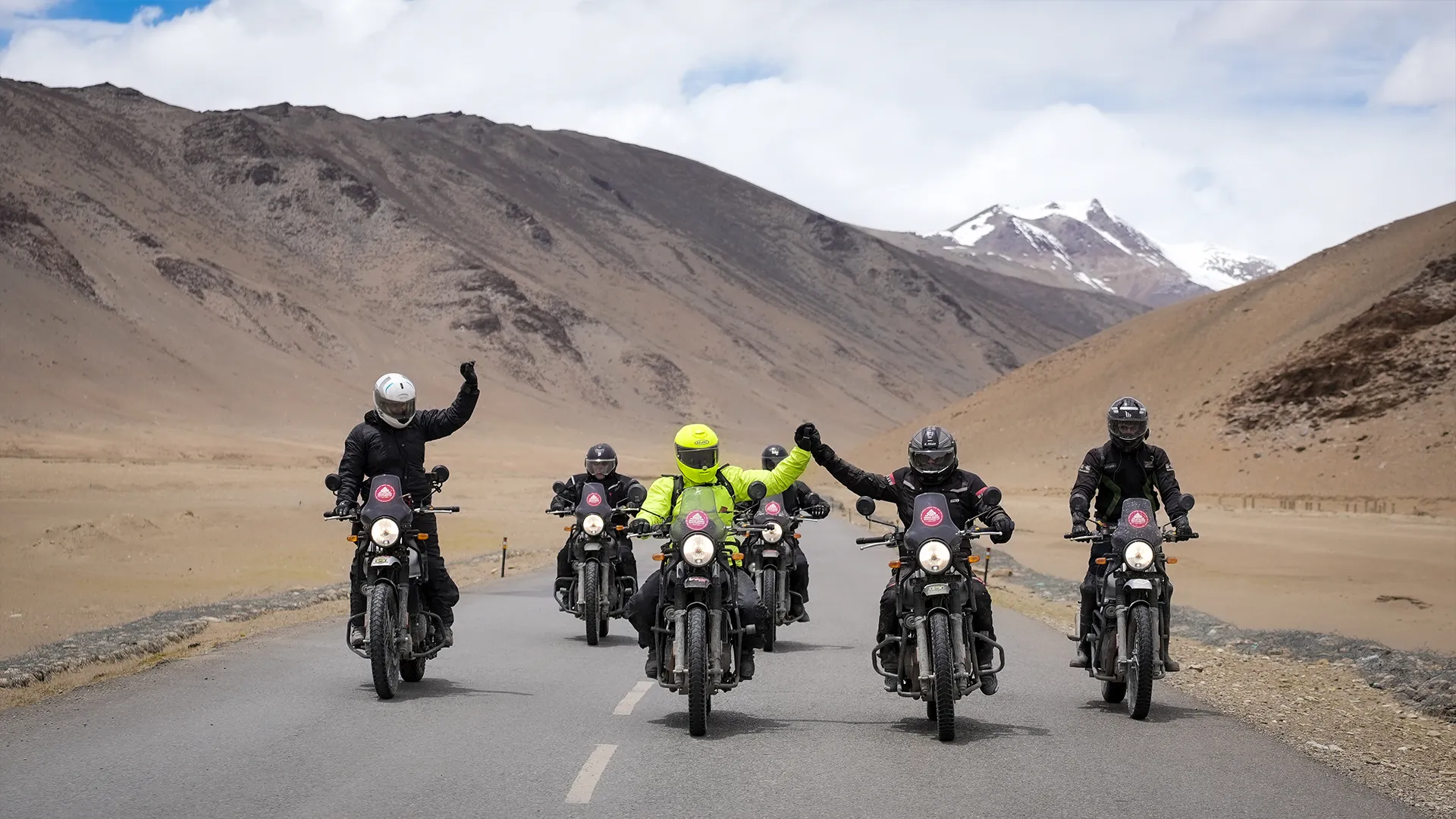
There is something that happens when you are on a motorcycle on a road that genuinely deserves to be ridden. The scenery is changing at exactly the right pace to absorb and appreciate it. The road is asking just enough of you to keep your attention completely present. The engine is doing what good engines do when they are working comfortably within their capability. And whatever was sitting on your mind before you started riding has been quietly replaced by the very particular kind of focused calm that only a motorcycle on a good road can produce.
India has roads that produce this feeling in abundance. The country is one of the most extraordinary motorcycle touring destinations in the world and a significant portion of the riding community that knows this does not live in India. International riders come specifically to experience routes that they cannot access anywhere else. The combination of dramatic landscape diversity, the cultural richness of what you encounter along the way, the genuine challenge that some of the highest and most remote roads in the world present, and the particular texture of riding in India where the road is rarely predictable and always engaging makes this country exceptional for motorcycle touring.
This blog is going to cover the best bike routes in India with the specificity and the honesty that riders deserve. Not a list of places with vague suggestions to ride between them but a proper account of what each route involves, what makes it worth doing, what the riding conditions are actually like, what the best time to go is, and what kind of preparation the route genuinely requires.
Manali to Leh: The Route That Defines Himalayan Riding
If there is one route in India that riders speak about with something approaching reverence it is the road from Manali to Leh across the high passes of Himachal Pradesh and Ladakh. It is not simply a famous route. It is a route that genuinely earns its reputation through the combination of extraordinary landscape, genuine physical challenge, and the particular sense of achievement that comes from completing something that demands real preparation and real commitment.
The route covers approximately 490 kilometres over two to three days depending on pace and acclimatisation stops. The road crosses several of the highest motorable passes in the world including Rohtang Pass at 3978 metres, Baralacha La at 4890 metres, Nakee La at 4739 metres, and Lachulung La at 5059 metres before the descent toward the Morey Plains and the final run into Leh. The altitude progression is significant and riders who do not allow adequate acclimatisation time, ideally spending a night at Keylong or Jispa before the higher passes, frequently experience altitude sickness that ranges from unpleasant to genuinely dangerous.
The road surface is one of the most variable you will encounter anywhere. The section near Manali and the Rohtang Pass area is sometimes paved and sometimes deeply rutted or washed out depending on recent weather. The middle sections through the Lahaul Valley improve significantly. The areas around major passes often involve gravel, loose rock, water crossings from glacial melt streams, and surfaces that require active management from the rider rather than passive following of the road. This is not a route for riders who are not comfortable with challenging surfaces and uncertain conditions.
The best time to ride Manali to Leh is between mid-June and late September. Outside of this window the passes are typically closed by snow and the road is impassable. July and August bring monsoon rainfall to the lower sections, which can create additional difficulty and occasional road closures from landslides. Early June and October are possible for experienced riders with appropriate preparation but these window edges carry real risk of being caught by early snow or late season closures.
The riding experience on a clear day on this route is genuinely extraordinary. The Morey Plains, where the road runs across a high-altitude plateau at over 4500 metres with nothing but vast, empty landscape in every direction, is one of the most visually striking stretches of road in the world. The approach to Leh along the Indus Valley, with the monastery of Thiksey visible on its hillside and the mountains surrounding the ancient city appearing gradually as you descend, is an arrival that makes every challenging kilometre before it feel completely worthwhile.
Leh to Khardung La and Nubra Valley: Beyond the Main Route
For riders who have completed the Manali to Leh route and want to extend their Ladakh experience, the road from Leh over Khardung La into the Nubra Valley is the natural next chapter. Khardung La at 5359 metres is often cited as one of the highest motorable passes in the world, though this claim is disputed by several other candidates in the region. What is not disputed is that the road over it and into the extraordinary Nubra Valley is one of the most memorable stretches of riding in India.
The Nubra Valley itself, where the Shyok and Nubra rivers meet in a landscape of sand dunes, high-altitude desert, and distant snow-capped peaks, is surreally beautiful. The sight of Bactrian camels walking through a landscape that looks nothing like any part of India you have encountered before is one of the distinctive images of Ladakh riding that stays with you long after the trip is complete.
The further extension into Pangong Lake via the Chang La pass adds another extraordinarily beautiful destination to the Ladakh riding circuit. The lake, with its famous shifting colours from deep blue to turquoise to green as light and weather conditions change, sits at 4350 metres along the border between India and China and is one of the most photographed landscapes in the Himalayan region.
Spiti Valley: The Middle Land for Serious Riders
The Spiti Valley in Himachal Pradesh is arguably the most challenging and most rewarding motorcycle touring destination in India for riders who want the high-altitude Himalayan experience without the traffic and relative development of the Leh circuit.
The route into Spiti from Shimla via Kinnaur follows the Sutlej and Spiti rivers through some of the most dramatic gorge scenery in the Himalayas. The road is narrow, often cut directly into cliff faces, and requires constant alertness because the margins for error are extremely small and the drop on the outer edge of the road is frequently severe. This is not a route for new or inexperienced riders. The combination of narrow road, sheer drops, variable surface, and the very real possibility of encountering large vehicles in sections with no passing room demands experienced judgment and absolute concentration.
The village of Kaza is the main settlement in Spiti Valley and the base from which riders explore the surrounding area including the monastery of Ki Gompa perched on its dramatic rocky outcrop, the ancient Dhankar monastery above the confluence of the Pin and Spiti rivers, and the road over Kunzum Pass which connects Spiti to the Lahaul Valley and provides a circuit option for riders who do not want to return the same way they came.
The best time for Spiti is July to September for most riders, though the precise window depends on snow clearance on the passes at the edges of the route. The route via Kinnaur remains accessible earlier in the season when the higher passes are still closed.
Ladakh Zanskar: The Remote Route Few Riders Complete
The road into the Zanskar Valley from Kargil is one of the most remote and most demanding motorcycle routes in India and completing it remains the ambition of a relatively small proportion of riders who have done the more established Ladakh routes. The valley is accessed via the Suru Valley with the Rangdum plain providing one of the most wild and empty landscapes in the entire Himalayan region.
The Pensi La pass at 4401 metres provides entry into the Zanskar Valley proper, and from there the road follows the Zanskar River through a landscape of almost preternatural beauty and remoteness. The villages of Padum and beyond are reached after riding through a world that feels genuinely separate from the rest of India in its geography, its culture, and its extraordinary physical isolation.
This route requires self-sufficiency in a way that more developed routes do not. Fuel availability is limited and carrying additional fuel is essential. Mechanical problems in remote sections can mean waiting for assistance that could be many hours away. Accommodation is basic and not always available exactly where you need it. Riders who complete the Zanskar circuit describe it as the hardest and most remarkable riding they have done in India.
The Northeast: Meghalaya, Arunachal Pradesh, and Beyond
The northeastern states of India represent a frontier for motorcycle touring that is only now beginning to receive the attention it deserves from the Indian riding community. The roads of Meghalaya, Arunachal Pradesh, Nagaland, and Manipur offer riding experiences that combine remarkable natural beauty, extraordinary cultural diversity, and a genuine sense of exploration that routes in more frequently toured areas cannot provide.
The road through Meghalaya from Shillong through Cherrapunji, one of the wettest places on earth, to the living root bridge villages of the Khasi Hills is one of the most visually distinctive rides in the country. The landscape of rolling green hills, the extraordinary cloud formations that gather around the high plateau, and the unique cultural landscape of the Khasi people create a riding environment unlike anything else in India.
Arunachal Pradesh, which requires Inner Line Permits for Indian citizens and additional permits for foreign visitors, offers riding through a state of enormous natural diversity that transitions from the plains of Assam through foothills and into proper Himalayan terrain as you move north toward the passes that border Tibet. Tawang, the ancient monastery town in the far northwest of the state, is the destination that most draws riders to Arunachal and the road to it, particularly the section over the Se La pass at 4170 metres, is one of the most beautiful high-altitude roads in India.
The riding conditions in the Northeast require preparation for heavy rainfall, as the region receives some of the highest rainfall totals in the world, and for road conditions that are often significantly more basic than in the more developed touring regions. The rewards for riders willing to engage with these conditions are experiences of genuine discovery in a part of India that remains largely unknown to the mainstream touring community.
The Coastal Route: NH66 Along the Western Ghats
Not all of India’s great bike routes involve high altitude and challenging conditions. The coastal National Highway 66 running along the western coast of India, connecting Mumbai through Goa, Karwar, Mangalore, Kozhikode, and Kochi to the tip of Kerala, is one of the most scenic and most enjoyable touring routes in the country for riders who prefer their riding beautiful and their challenges moderate.
The route follows the coastline closely enough in many sections that the Arabian Sea is either directly visible or accessible within short diversions from the main road. The landscape transitions through the fishing towns and seafood restaurants of the Konkan coast, through the palm-fringed beaches and cashew plantations of Goa, through the dramatic coastal cliffs and pristine beaches of Karnataka’s coast, and into the lush, intensely green landscape of Kerala’s coast where the road passes through coconut groves, backwater areas, and some of the most beautiful stretches of tropical scenery in the country.
The best time to ride NH66 is between November and March when the monsoon has passed, the humidity is more manageable, and the roads are dry. The road quality is generally good by Indian standards with wide sections in many places and the traffic, while present, is manageable outside of major town centres. The pace of riding on this route is slower and more contemplative than the high-altitude routes and that is a significant part of its appeal. It is a route for stopping at every interesting fishing harbour, eating fresh seafood at roadside stalls, and letting the journey be the destination rather than rushing toward it.
Rajasthan: The Desert Circuit
Rajasthan offers a completely different character of motorcycle touring from the Himalayan routes and the coastal route. Riding through the desert landscape, the ancient forts and palaces, and the extraordinary cultural richness of Rajasthan is an experience of India’s history and civilisation that the mountain routes cannot provide in the same way.
The classic Rajasthan riding circuit typically covers Jaipur, Pushkar, Jodhpur, Jaisalmer, Bikaner, and back through Shekhawati with its extraordinary painted havelis before returning to the starting point. The roads between these cities are generally good, the distances are manageable, and the combination of architectural magnificence, living culture, and the particular quality of light in the desert landscape makes this one of the most photographically rewarding touring circuits in the country.
The best time for Rajasthan riding is October to February when the temperatures are manageable. The summer months from April to June bring temperatures that can exceed 45 degrees Celsius in the desert areas and make riding deeply uncomfortable and potentially dangerous. The winter months from December to January can be surprisingly cold at night, requiring appropriate layering, but the daytime conditions are excellent.
The riding character in Rajasthan is very different from the mountain routes. The roads are wider, the traffic is more predictable, the altitude presents no challenge, and the pace of the tour can be genuinely relaxed. This makes it an excellent choice for riders who want the experience of a long-distance touring circuit without the technical demands and physical challenges of the Himalayan alternatives.
Western Ghats: Pune to Goa via the Ghats
The route from Pune through the Western Ghats to Goa is one of those rides that is close enough to major population centres to be done as a long weekend and dramatic enough in its landscape to feel like a proper adventure. The ascent into the Ghats from the Deccan Plateau, passing through the historic Shivneri Fort area and the beautiful Tamhini Ghat section, puts the rider into a landscape of waterfalls, dense forest, and dramatic viewpoints that appears with remarkable speed given the proximity to one of India’s largest cities.
The route options through the Ghats from Pune to the coast are multiple and choosing different lines allows riders to explore different sections of this extraordinarily scenic mountain range. The Tamhini Ghat route is particularly celebrated for its beauty during and after the monsoon when every surface is green, waterfalls are everywhere, and the mist that settles in the valleys creates a riding environment of unusual atmospheric beauty. The Malshej Ghat and Bhor Ghat routes provide alternatives with their own character and their own points of visual interest.
The timing of this route matters significantly. The monsoon months from June to September make it most dramatically beautiful but also most challenging, with wet roads, reduced visibility, and the possibility of landslides in sections. The pre-monsoon and post-monsoon periods offer the best combination of green landscape and manageable conditions for riding.
Coorg to Ooty: The South’s Greatest Riding Circuit
The riding through the hill country of Karnataka and Tamil Nadu that connects Coorg to Ooty via Wayanad provides some of the best medium-altitude riding in South India. The roads through coffee and tea plantations, wildlife reserve buffer zones, and the dramatic Nilgiri Hills terrain are visually excellent and technically engaging without the extreme challenges of the Himalayan routes.
The section through the Nagarhole National Park buffer and Wayanad in Kerala is particularly memorable. The dense forest, the possibility of wildlife sightings including elephants and deer that are genuine rather than arranged, and the quality of light through the canopy on a clear morning make this one of the most atmospheric stretches of riding in the south of the country.
The Ooty plateau itself, with its famous tea estates, its colonial architecture, and the extraordinary views from the Doddabetta peak area, provides a destination that rewards time spent rather than just passing through. Riders who add the ride down the Kalhatty Ghat from Ooty toward Masinagudi and the Mudumalai Tiger Reserve to their circuit find one of the most exciting descending roads in South India, with seventeen hairpin bends dropping through several hundred metres of altitude change in a few kilometres.
Essential Preparation for Indian Bike Touring
Riding the routes described in this blog requires preparation that goes beyond simply fuelling up and setting off. The level of preparation required varies significantly between the routes but certain principles apply across all of them.
Mechanical preparation of the motorcycle before any long-distance Indian touring is essential. Fresh engine oil and filter, a check of chain tension and lubrication, brake inspection and fluid level check, tyre condition and pressure, and a check of all electrical systems including lights and horn are the minimum. For Himalayan routes specifically, additional checks of cooling systems on liquid-cooled bikes and a full inspection of spokes and wheel bearings on bikes with wire wheels are important given the vibration and impact that rough road surfaces produce.
Carrying basic spare parts and tools appropriate to your motorcycle is important on any route where breakdown support is not readily accessible. A puncture repair kit, a basic tool kit matched to your motorcycle’s fasteners, spare levers, electrical tape, and a tow rope for emergencies are items that experienced touring riders carry as a matter of course.
Appropriate riding gear for the conditions you will encounter is not optional on serious touring routes. A proper motorcycle jacket with armour, riding trousers, proper boots that cover the ankle, and gloves appropriate to the temperature range you will encounter protect you in the event of an incident and protect you from the physical fatigue of riding in cold, wet, or high-UV conditions that makes accidents more likely. For Himalayan routes, thermal layers, waterproofing, and warm gloves are essential given the temperature range from hot valley floors to cold high passes that can be encountered in a single day.
Conclusion
India is one of the great motorcycle touring nations of the world and the routes described in this blog are among the most extraordinary roads on the planet by any measure. The Manali to Leh route and its Ladakh extensions deliver a high-altitude Himalayan experience of pure drama and genuine challenge. The Spiti circuit rewards serious riders with remoteness and beauty that the more accessible routes cannot match. The Northeast offers genuine exploration in a part of India that most tourists have never considered. The coastal NH66 provides beauty and relaxation at a contemplative pace. Rajasthan offers history and culture alongside excellent roads. The Western Ghats and the South Indian hill routes deliver extraordinary scenery within reach of the major population centres of the south.
Every one of these routes rewards preparation. The rider who has serviced their motorcycle properly, packed appropriate gear, planned their fuel stops, identified accommodation options in advance while remaining flexible about using them, and researched the specific conditions and challenges of their chosen route will have an experience that is dramatically better than the rider who simply sets off and hopes for the best.
But the preparation is only the foundation. The experience of riding these roads, the particular way that a motorcycle in the right hands on the right road makes you feel completely present in the world you are moving through, is something that no amount of reading about it can substitute for. The routes are there and they are extraordinary. The only thing remaining is to go and ride them.
Plan your route. Prepare your motorcycle. Pack your gear. And go. The roads of India are waiting for you and they will give you back more than you bring to them.
Every rider in India has a route they talk about with that particular light in their eyes. Go and find yours.